Back to the deck · No. 34Swords
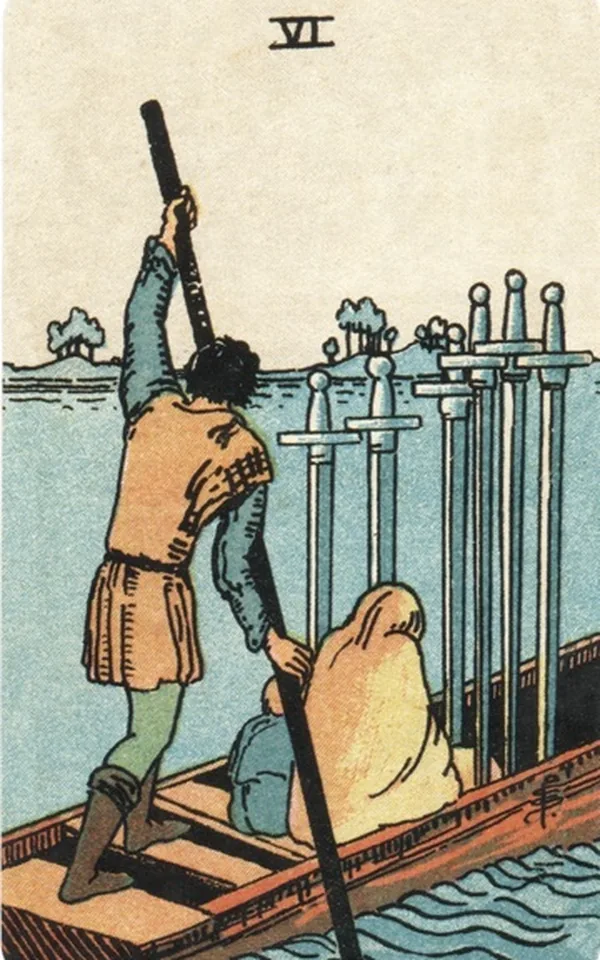
△ Six of Swords
Six of Swords
- transition
- moving on
- calmer waters
- carried across
Quick facts
- Deck
- Swords
- Number
- No. 34
- Artwork
- Rider-Waite-Smith · 1909
Upright
A boat moves away from rough water; the passengers face forward, quiet. Six of Swords is transition that is already paid for — leaving feels less like triumph and more like arithmetic. Go anyway. Not every crossing needs ceremony; some just need the ferry to leave on time.
Reversed
Reversed, the crossing stalls: packed bags at the door, or the old shore pulling hard. What is unmovable — the unfinished conversation, the unclaimed belonging — name it and handle it, or it rides the boat with you disguised as cargo.
In love, at work, with money
In love
In love, the Six of Swords is the quiet transition: moving the relationship to calmer waters — or moving yourself out of one, gently. The crossing is bittersweet; you bring the lessons, not the luggage. Progress here is felt in months, not days.
At work
At work, this card marks a smooth transition: the new role, the transfer, the team move that steadies everything. The ferryman knows the route — cooperate with the process instead of fighting the current.
With money
Money-wise, the Six of Swords is moving finances to safer ground: debt consolidation, the switch to lower fees, slow steady passage out of rough waters.
Common questions
Is the Six of Swords a yes or no card?
A gentle yes — especially for moves, transitions and leaving difficulty behind. The Six of Swords says passage is underway; the far shore is calmer than this one.
Why are the passengers silent in the Six of Swords?
A ferryman poles a boat bearing huddled figures and six swords. Transition takes effort and quiet: you can carry your blades across, but you cannot chat through the current.
Reads in combination
- Death — Six of Swords + Death: the ending and the crossing agree — this move completes what the chapter started.
Sources & further reading
Card art: the Rider-Waite-Smith tarot (1909) — public domain originals. Symbol readings follow the original deck's imagery; the meanings are Soulolo's own plain-language interpretations.
Ninety seconds is enough
Ask one honest question and take one small action. The paper updates every night.
Draw tonight's cards