Back to the deck · No. 33Swords
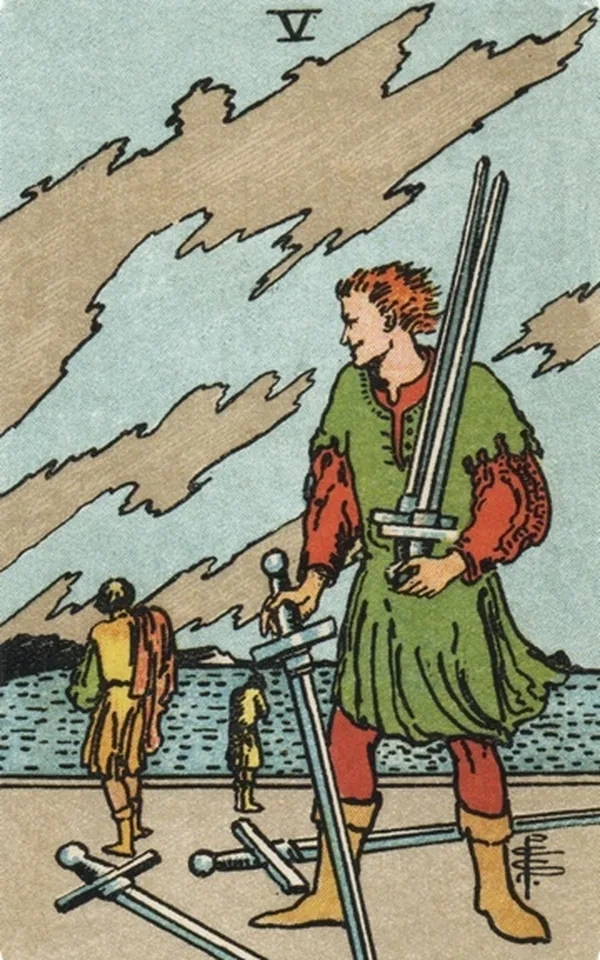
△ Five of Swords
Five of Swords
- pyrrhic victory
- the win that costs
- strife
- knowing when to leave
Quick facts
- Deck
- Swords
- Number
- No. 33
- Artwork
- Rider-Waite-Smith · 1909
Upright
The smirking victor collects swords nobody wants to fight for anymore. Five of Swords asks the only question that matters here: won what, at what price? If the argument is already won but the room is lost, put the sword down and pick up the relationship. Some hills are just slopes.
Reversed
Reversed, the aftermath is settling: apology drafted, grudge softening, or the same fight brewing with new swords. De-escalate first, audit second. And if you were the smirk — repair beats justification; nobody respects the win they resented.
In love, at work, with money
In love
In love, the Five of Swords is the won argument that lost the relationship: being right at the cost of warmth. Ask after the fight: did I want the win or the bond? Re-approach with the lesson, not the victory lap.
At work
At work, this card warns about pyrrhic wins: the deal squeezed so hard the client hates you, the colleague outmaneuvered for a short lead. Check the cost column. Sometimes walking away is the profitable move.
With money
Money-wise, the Five of Swords is winning the negotiation and losing the relationship: the squeezed price, the felt unfairness. Account for goodwill — it has real cash value.
Common questions
Is the Five of Swords a yes or no card?
A cold no — or a yes you will regret. The Five of Swords says any win here costs more than it pays: reconsider the whole approach before pressing it.
What does the Five of Swords symbolize?
A smirking figure collecting swords while defeated parties trudge off by the water — victory without honor. It is the card of wins that cost trust.
Reads in combination
- The Hanged Man — Five of Swords + Justice: the ledger after the skirmish — tally what the victory actually cost before displaying it.
Sources & further reading
Card art: the Rider-Waite-Smith tarot (1909) — public domain originals. Symbol readings follow the original deck's imagery; the meanings are Soulolo's own plain-language interpretations.
Ninety seconds is enough
Ask one honest question and take one small action. The paper updates every night.
Draw tonight's cards