Back to the deck · No. 35Swords
△ Seven of Swords
Seven of Swords
- strategy
- the quiet exit
- self-deception
- what slips out
Quick facts
- Deck
- Swords
- Number
- No. 35
- Artwork
- Rider-Waite-Smith · 1909
Upright
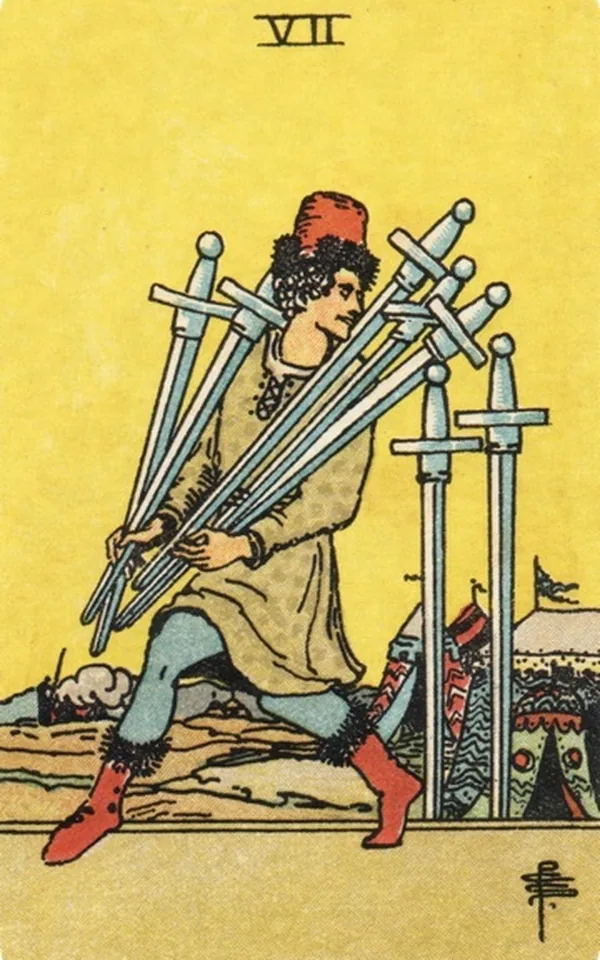
Someone tiptoes off with five swords, leaving two behind. Seven of Swords is strategy — sometimes wise, sometimes larcenous. Done well: the discreet exit, the unfinished reveal kept for the right moment. Done badly: lying to yourself first. Ask honestly whose swords those are, and whether the sneak is necessary or just familiar.
Reversed
Reversed, the sneak is exposed — by others, or finally by your own conscience. Confession costs less now than discovery later. Or the strategy was sound and shame was the only leak; then simply say it plainly and keep walking.
In love, at work, with money
In love
In love, the Seven of Swords asks who is sneaking — including you: the white lies, the private chats, the feelings withheld to keep peace. Self-honesty first. If someone is deceiving you, collect facts quietly before confrontation.
At work
At work, this card flags strategy — or theft: the competitor undercutting, the colleague taking credit, or your own shortcut around a process that matters. Check both directions: act shrewdly, but never against your own standards.
With money
Money-wise, the Seven of Swords warns of quiet leaks: hidden fees, someone with access, the scam that avoids attention. Audit silently, then close the gap.
Common questions
Is the Seven of Swords a yes or no card?
A cautious no — to trusting the setup as it appears. The Seven of Swords says something is being carried off quietly; verify before you believe, and keep your own hands clean.
Why does the Seven of Swords figure sneak away?
A figure tiptoes from an army camp with five swords, two left standing. The card holds both readings: cunning strategy that spares a fight — or theft that will be discovered.
Reads in combination
- The Devil — Seven of Swords + Devil: the trick that runs on autopilot — name the self-deal, and the sneak loses its job.
Sources & further reading
Card art: the Rider-Waite-Smith tarot (1909) — public domain originals. Symbol readings follow the original deck's imagery; the meanings are Soulolo's own plain-language interpretations.
Ninety seconds is enough
Ask one honest question and take one small action. The paper updates every night.
Draw tonight's cards