Back to the deck · No. 19Cups
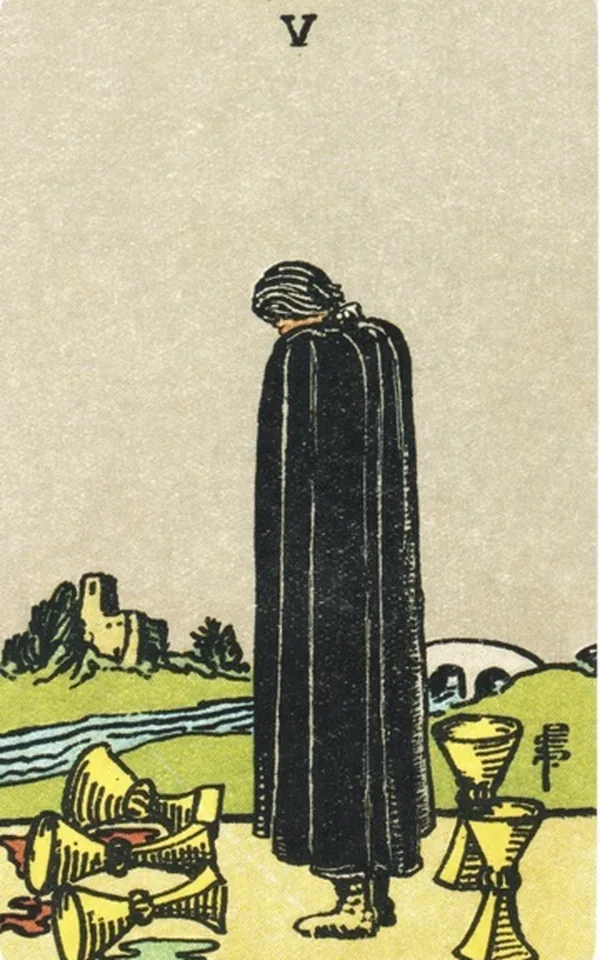
△ Five of Cups
Five of Cups
- grief
- loss
- the two cups still standing
- regret
Quick facts
- Deck
- Cups
- Number
- No. 19
- Artwork
- Rider-Waite-Smith · 1909
Upright
Three cups spilled; two remain upright behind you. Five of Cups does not argue you out of grief — it only points, gently, at what did not spill. Loss is real and deserves its time. When you are ready, turn around: the bridge and the two full cups have been waiting the whole time.
Reversed
Reversed, the mourning is completing or being avoided. Completing: acceptance is arriving; let it. Avoiding: the grief was never processed, only postponed — schedule the honest hour now, because unprocessed loss compounds interest.
In love, at work, with money
In love
In love, the Five of Cups is grief doing bookkeeping: two cups spilled, and — if you turn around — one still standing. Mourn honestly, then inventory what loss left untouched. The figure in black by the river is not your only future.
At work
At work, this card processes the failure: the lost client, the shuttered project. Grieve the spill, then walk toward the standing cups — the bridge, the team, the lesson that only this setback could teach.
With money
Money-wise, the Five of Cups is the loss review: what actually went, what remains. Do the accounting honestly — then stop auditing the spilled and start funding the standing.
Common questions
Is the Five of Cups a yes or no card?
A mourning no — for now. The Five of Cups asks you to grieve what spilled before deciding anything; the standing cup behind you changes the answer once you look.
Why does a bridge appear in the Five of Cups?
Behind the mourning figure: a bridge to town, one standing cup, and water still flowing. The card shows loss and the crossing out of loss in the same frame.
Reads in combination
- The Moon — Five of Cups + Star: grief and repair in one breath — the pouring water is for you, not the spilled cups.
Sources & further reading
Card art: the Rider-Waite-Smith tarot (1909) — public domain originals. Symbol readings follow the original deck's imagery; the meanings are Soulolo's own plain-language interpretations.
Ninety seconds is enough
Ask one honest question and take one small action. The paper updates every night.
Draw tonight's cards