Back to the deck · No. 18Cups
△ Four of Cups
Four of Cups
- contemplation
- the offered cup ignored
- apathy
- reassessment
Quick facts
- Deck
- Cups
- Number
- No. 18
- Artwork
- Rider-Waite-Smith · 1909
Upright
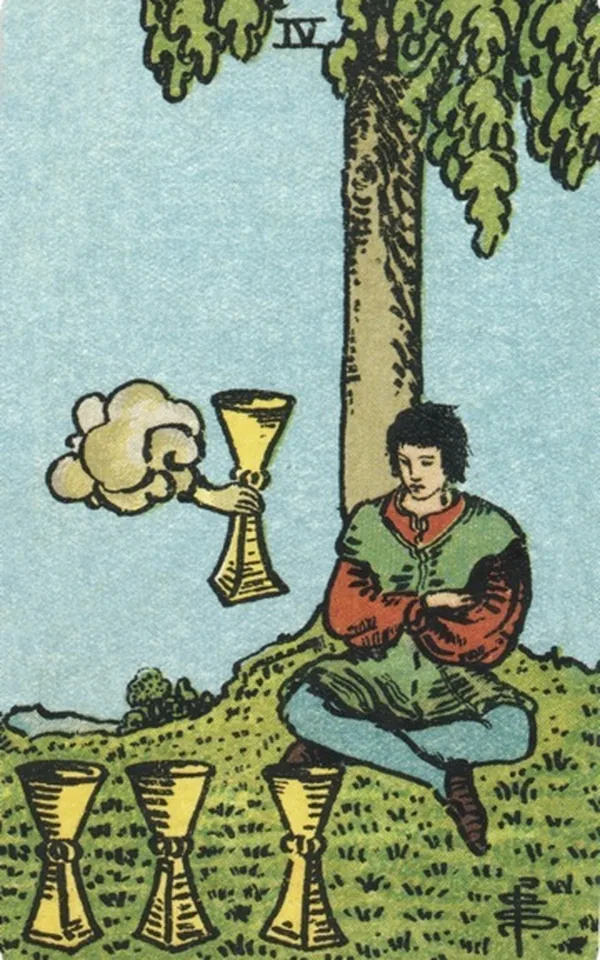
A hand offers a cup; the seated figure studies the three he already has. Four of Cups is the mood where nothing lands — not because nothing is offered, but because you are mid-audit. Fine. Finish the audit, then actually look at the new cup: it is usually better than it appears from the chair.
Reversed
Reversed, the fog lifts or the withdrawal deepens. If lifting: accept the offer you almost refused — food, help, an invitation. If deepening: apathy this persistent is information; something in your life is asking to be renegotiated at a deeper level.
In love, at work, with money
In love
In love, the Four of Cups is apathy with an offered cup: someone is extending something real while you stare at your own boredom. Check whether the discontent is about them — or about a mood you brought in. Look up before you write anyone off.
At work
At work, this is the missed-offer card: opportunities floating past while you scroll your own discontent. Name what you actually want, then reassess the cup in front of you — it may be better than your mood admits.
With money
Money-wise, the Four of Cups is the meh that costs money: comfort spending to fill a flat mood. The fix is curiosity, not checkout.
Common questions
Is the Four of Cups a yes or no card?
A contemplative maybe. The Four of Cups says an offer stands while you sit unmoved: look again before declining — and look inside before accepting.
Why does the figure ignore the offered cup?
Three cups stand filled; a fourth is offered from a cloud — and he stares at none of them. The card draws disconnection from gifts already present: apathy that a small look upward could end.
Reads in combination
- The Hanged Man — Four of Cups + Hanged Man: the pause is doing real work — but set a date for coming down from the tree.
Sources & further reading
Card art: the Rider-Waite-Smith tarot (1909) — public domain originals. Symbol readings follow the original deck's imagery; the meanings are Soulolo's own plain-language interpretations.
Ninety seconds is enough
Ask one honest question and take one small action. The paper updates every night.
Draw tonight's cards