Back to the deck · No. 30Swords
△ Two of Swords
Two of Swords
- stalemate
- blindfolded choice
- avoidance
- the tie
Quick facts
- Deck
- Swords
- Number
- No. 30
- Artwork
- Rider-Waite-Smith · 1909
Upright
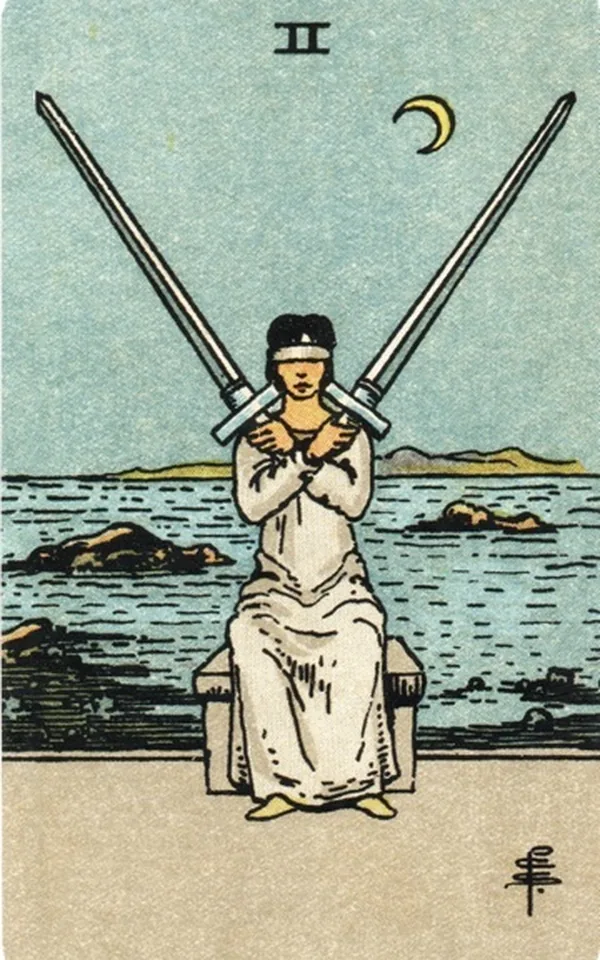
Blindfolded, arms crossed, two swords balanced. Two of Swords is the stalemate you have engineered: refusing to look so you don't have to choose. The blindfold is yours; so is the removal. Take it off in daylight, with facts on the table — the tie breaks easier seen than felt.
Reversed
Reversed, the blindfold slips or the stalemate breaks. If slipping: the information you avoided is arriving; let it. If breaking: the decision made itself under pressure — audit it gently and correct what pressure got wrong.
In love, at work, with money
In love
In love, the Two of Swords is the blindfolded stalemate: you know a choice is due and you are not looking at it. The sword in your lap says the decision is yours to make. Take the blindfold off — the data is less scary than the avoidance.
At work
At work, this card is decision paralysis: two paths, equal weight, stalled weeks. Neither option destroys you — that is why you are stuck. Lower the defenses, gather one missing fact, and choose by values, not by fear.
With money
Money-wise, the Two of Swords is the unopened statement: accounts you refuse to look at. Open it. Stalemate costs interest; clarity costs one uncomfortable click.
Common questions
Is the Two of Swords a yes or no card?
A suspended neither. The Two of Swords shows a decision being avoided: remove the blindfold, weigh both sides honestly, and the answer stops hiding.
Why is the figure blindfolded in the Two of Swords?
A blindfold, crossed blades, a calm sea — voluntary blindness in the name of peace. The card warns that not-choosing is itself a choice, usually the pricier one.
Reads in combination
- The Hanged Man — Two of Swords + Justice: the weighed stalemate — write both options' true costs and the eye mask stops working.
Sources & further reading
Card art: the Rider-Waite-Smith tarot (1909) — public domain originals. Symbol readings follow the original deck's imagery; the meanings are Soulolo's own plain-language interpretations.
Ninety seconds is enough
Ask one honest question and take one small action. The paper updates every night.
Draw tonight's cards