Back to the deck · No. 31Swords
△ Three of Swords
Three of Swords
- heartbreak
- the painful truth
- words that cut
- grief named
Quick facts
- Deck
- Swords
- Number
- No. 31
- Artwork
- Rider-Waite-Smith · 1909
Upright
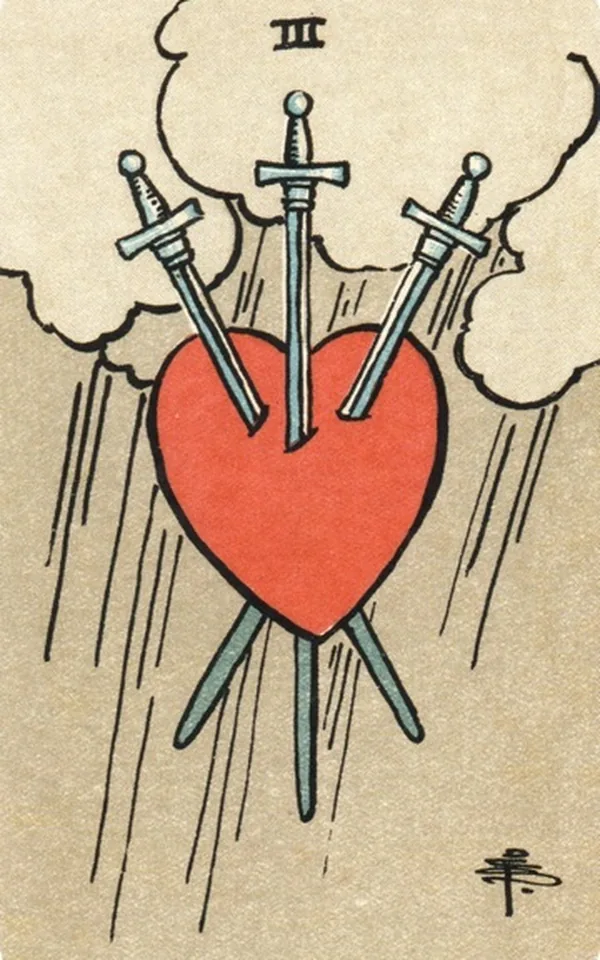
A heart, pierced, in the rain. Three of Swords is the truth that hurt on its way in — the diagnosis, the betrayal, the sentence you did not want to read. The card makes no promise except this: pierced things can heal around the truth, and never around the lie. Let it rain today.
Reversed
Reversed, the blade is being removed or refused. Removing: healing is underway — expect the ache to spike before it settles. Refusing: the words are still in there, working. Speak them, write them, or hand them to a professional; swords do not dissolve on their own.
In love, at work, with money
In love
In love, the Three of Swords is the heartbreak itself: the betrayal, the breakup, the sentence that landed. Do not rush the rain — feel it fully, say what happened plainly, and let the storm pass through instead of renting it a room.
At work
At work, this card is the hard criticism or the layoff news: real pain, delivered by words. Separate the hurt from the information — often both are useful and neither should be denied.
With money
Money-wise, the Three of Swords is the financial heartbreak: the loss, the fee, the betrayal by a number. Name it, learn the lesson once, then close the wound with a plan.
Common questions
Is the Three of Swords a yes or no card?
A painful no — or a painful truth that must come out first. The Three of Swords marks heartbreak and honest grief: the answer improves only after the feeling is allowed.
Why does the Three of Swords show a heart pierced by swords?
A heart in storm-rain behind three blades — sorrow made visible and factual. The image promises this: grief named clearly is grief that eventually moves.
Reads in combination
- The Moon — Three of Swords + Star: the wound and the water — healing begins the moment the pain is allowed to be real.
Sources & further reading
Card art: the Rider-Waite-Smith tarot (1909) — public domain originals. Symbol readings follow the original deck's imagery; the meanings are Soulolo's own plain-language interpretations.
Ninety seconds is enough
Ask one honest question and take one small action. The paper updates every night.
Draw tonight's cards