Back to the deck · No. IVMajor arcana
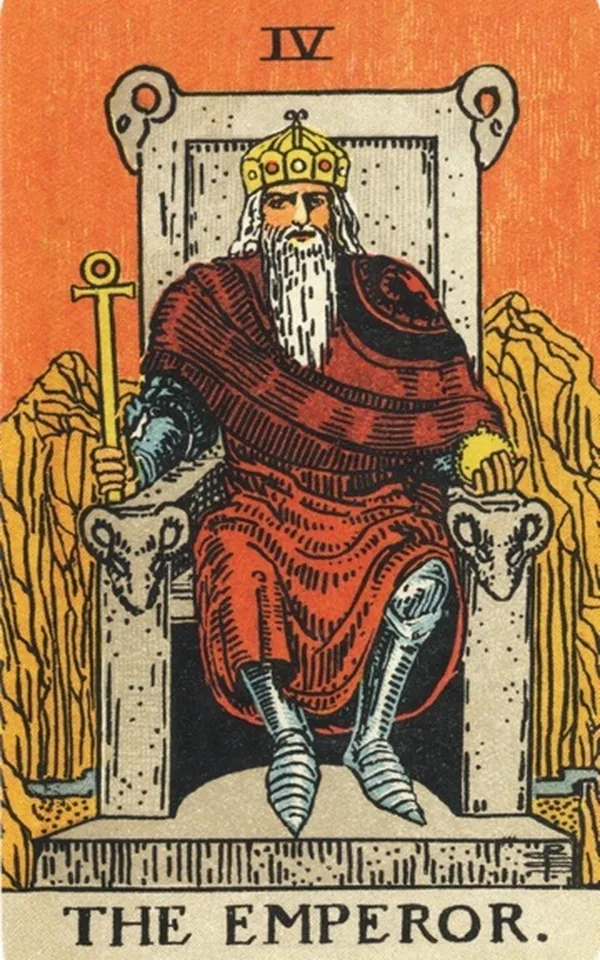
△ The Emperor
The Emperor
- structure
- authority
- boundaries
- order
Quick facts
- Deck
- Major arcana
- Number
- No. IV
- Artwork
- Rider-Waite-Smith · 1909
Upright
Freedom needs a frame. The Emperor builds the schedule, the budget, the boundary — not to constrain life but to hold it up. If your situation feels chaotic, the missing piece is not more effort; it is a rule written down and kept. Be the one who keeps it.
Reversed
Reversed, the frame has become a cage — rules enforced for their own sake, control substituting for trust, or your own rigidity making everyone smaller. Ask which structure is actually serving the mission, and amend or drop the rest. Authority flexes; tyranny just holds.
In love, at work, with money
In love
In love, The Emperor asks for structure that protects tenderness — stated expectations, kept promises, a relationship with load-bearing walls. If things feel wobbly, the fix is usually boring: routines, clarity, follow-through. Kindness with a spine.
At work
At work, this card backs systems over moods: the schedule, the standard, the decision written down and defended. Take the chair — set the rules you will actually keep. Watch for the failure mode: control that stops listening.
With money
Money-wise, The Emperor is the budget with teeth: fixed amounts, automatic transfers, debt attacked on schedule. Order beats intensity — a boring system you keep beats a strict one you quit.
Common questions
Is The Emperor a yes or no card?
A structured yes — if you accept the terms. The Emperor says yes to plans that respect rules and timelines, and a firm no to shortcuts that would undermine the whole.
What does The Emperor symbolize?
Authority made durable: a stone throne, a ram-headed throne armor, a barren mountain range turned into a stronghold. He rules what is built to outlast moods.
Reads in combination
- Justice — Emperor + Justice: structure plus fairness — write the rule, then apply it to yourself first.
Sources & further reading
Card art: the Rider-Waite-Smith tarot (1909) — public domain originals. Symbol readings follow the original deck's imagery; the meanings are Soulolo's own plain-language interpretations.
Ninety seconds is enough
Ask one honest question and take one small action. The paper updates every night.
Draw tonight's cards