Back to the deck · No. 5Wands
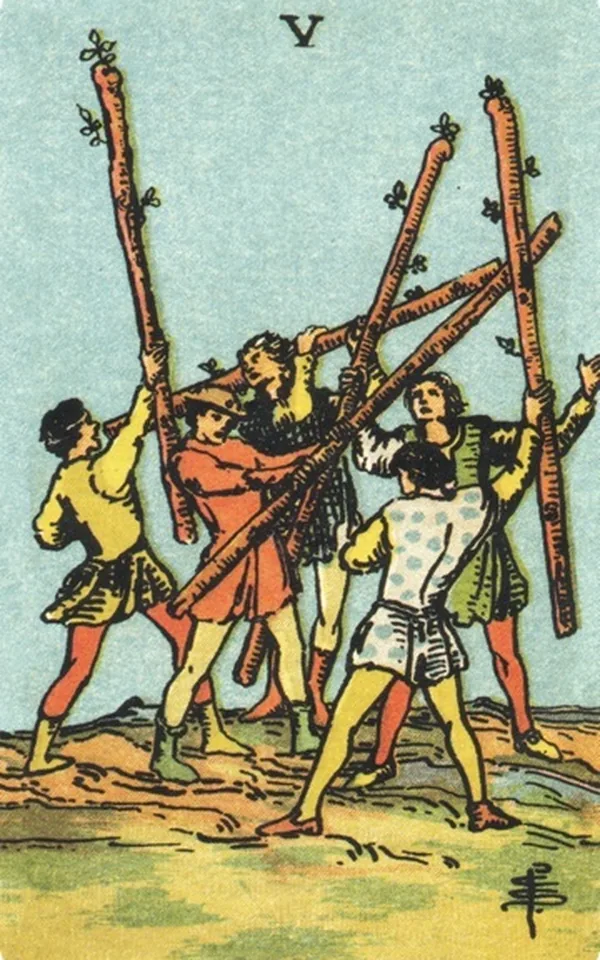
△ Five of Wands
Five of Wands
- friction
- competition
- creative conflict
- scramble
Quick facts
- Deck
- Wands
- Number
- No. 5
- Artwork
- Rider-Waite-Smith · 1909
Upright
Five people, one field, nobody listening. The Five of Wands is friction without malice — the competitive scrum where everyone swings and little lands. Friction is not the enemy; it forges. Claim your lane, speak over the noise once, and turn the scrimmage into practice.
Reversed
Reversed, the conflict is either ending or avoiding: someone finally said the real thing, or everyone is swallowing it politely. If it ended — good, integrate the lesson. If avoided — the fight is still scheduled; better on your terms than at the worst moment.
In love, at work, with money
In love
In love, the Five of Wands is friction that has not found its topic: bickering, competing for the last word, testing who cares more. The fight is real but unfocused — name the actual subject and spar on purpose; sparring can be fun when it is fair.
At work
At work, expect competition in motion: rivals for the same role, clashing ideas in review, a crowded field. Treat it as training, not war — sharpen your pitch against the friction and let the best version win openly.
With money
Money-wise, the Five of Wands is a crowded marketplace: bids, comparisons, everyone shouting yields. Differentiate or wait for quieter pricing.
Common questions
Is the Five of Wands a yes or no card?
A scrappy yes with friction attached. The Five of Wands says the contest is winnable and even useful — but only if you engage with skill instead of temper.
What does the Five of Wands symbolize?
Five figures clashing with staves in mock battle — no blood, all heat. It is the card of competition, creative friction and the messy energy of many voices in one arena.
Reads in combination
- Justice — Five of Wands + Justice: rules for the scrimmage — a fair process turns rivalry into progress.
Related terms
Sources & further reading
Card art: the Rider-Waite-Smith tarot (1909) — public domain originals. Symbol readings follow the original deck's imagery; the meanings are Soulolo's own plain-language interpretations.
Ninety seconds is enough
Ask one honest question and take one small action. The paper updates every night.
Draw tonight's cards